
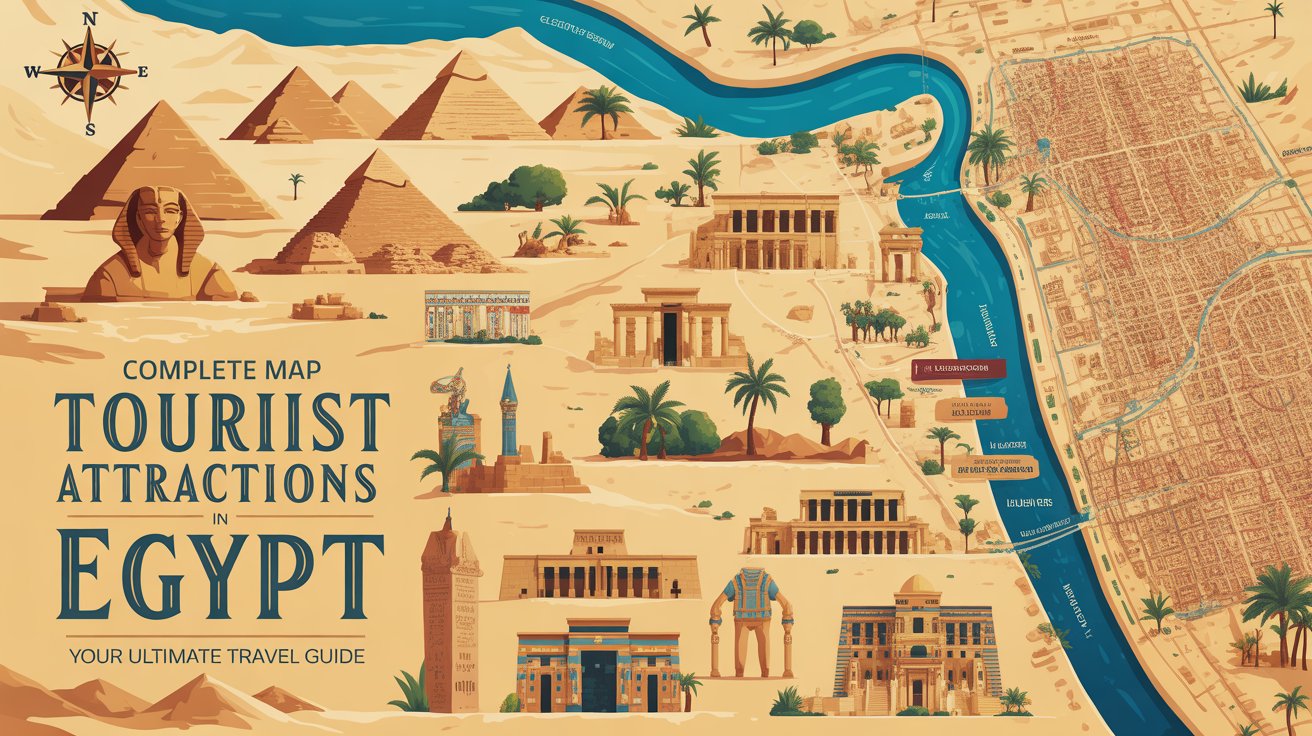
Complete Map of Tourist Attractions in Egypt
Egypt, the land of pharaohs and ancient wonders, remains one of the world's most captivating destinations. From the iconic pyramids to pristine Red Sea beaches, understanding the geographical layout of Egypt's tourist attractions is essential for planning the perfect Egyptian adventure. This comprehensive guide maps out the must-visit locations across this magnificent country.
Northern Egypt: Cairo and Giza
The Pyramids of Giza
Located just outside Cairo, the Giza Plateau hosts Egypt's most famous landmarks. The Great Pyramid of Khufu, the Pyramid of Khafre, and the Pyramid of Menkaure stand alongside the enigmatic Great Sphinx. These 4,500-year-old structures are easily accessible from Cairo, making them perfect for day trips.
Egyptian Museum
Situated in Tahrir Square, downtown Cairo, the Egyptian Museum houses over 120,000 ancient artifacts, including the treasures of King Tutankhamun. The newly opened Grand Egyptian Museum near the pyramids offers an even more expansive collection.
Islamic Cairo
This historic district features stunning medieval architecture, including the Citadel of Saladin, the Mosque of Muhammad Ali, and the bustling Khan el-Khalili bazaar. These attractions cluster together in eastern Cairo, perfect for a full day of exploration.
Alexandria: The Mediterranean Jewel
On Egypt's northern coast, Alexandria offers a refreshing contrast to the desert landscapes. The Bibliotheca Alexandrina, Qaitbay Citadel, and Montaza Palace overlook the Mediterranean Sea. The city lies approximately 220 kilometers north of Cairo, easily reached by road or rail.
Upper Egypt: The Nile Valley
Luxor: The World's Greatest Open-Air Museum
Luxor, located 670 kilometers south of Cairo, divides into two banks:
East Bank:
- Karnak Temple Complex: The largest ancient religious site in the world
- Luxor Temple: A stunning complex beautifully illuminated at night
West Bank:
- Valley of the Kings: Final resting place of 63 pharaohs including Tutankhamun
- Valley of the Queens: Featuring the spectacular tomb of Nefertari
- Hatshepsut Temple: An architectural masterpiece carved into limestone cliffs
- Colossi of Memnon: Two massive stone statues standing guard
Aswan: Gateway to Nubia
Further south, 230 kilometers from Luxor, Aswan offers a more relaxed atmosphere. Key attractions include:
- Philae Temple on Agilkia Island
- The Unfinished Obelisk
- Nubian villages with vibrant culture
- Aswan High Dam
Abu Simbel
Located 280 kilometers southwest of Aswan near the Sudanese border, the twin temples of Abu Simbel rank among Egypt's most impressive monuments. Most visitors take early morning flights or organized tours from Aswan.
Eastern Egypt: Red Sea Coast
Hurghada
Positioned 450 kilometers southeast of Cairo, Hurghada serves as Egypt's premier beach resort destination. World-class diving sites, snorkeling spots, and luxury resorts line the coastline.
Sharm El-Sheikh
At the southern tip of the Sinai Peninsula, Sharm El-Sheikh offers access to spectacular coral reefs, including Ras Muhammad National Park. The resort town sits approximately 500 kilometers from Cairo.
Dahab
This laid-back beach town north of Sharm El-Sheikh attracts divers to the famous Blue Hole and offers excellent windsurfing conditions at Laguna Beach.
Western Egypt: The Desert Oases
Siwa Oasis
Near the Libyan border, 560 kilometers west of Cairo, Siwa Oasis provides a unique desert experience. Visit the Oracle Temple where Alexander the Great once consulted the gods, swim in Cleopatra's Spring, and explore the ancient mud-brick fortress of Shali.
Bahariya Oasis and the White Desert
Located 370 kilometers southwest of Cairo, Bahariya serves as the gateway to the surreal White Desert National Park, where chalk-white rock formations create an otherworldly landscape.
Planning Your Egyptian Journey: Regional Itineraries
The Classic Route (10-14 days)
Cairo (3 days) → Luxor (3 days) → Aswan (2 days) → Abu Simbel (day trip) → Red Sea resort (3-4 days)
The Cultural Deep Dive (7-10 days)
Cairo (3 days) → Alexandria (2 days) → Luxor (3 days) → Aswan (2 days)
The Adventure Trail (10-14 days)
Cairo (2 days) → Western Desert Oases (4-5 days) → Luxor (2 days) → Red Sea (3 days)
Essential Travel Tips for Navigating Egypt
Getting Around:
- Domestic flights connect major cities quickly
- Nile cruises between Luxor and Aswan combine transportation with sightseeing
- Trains run regularly between Cairo, Alexandria, Luxor, and Aswan
- Private cars with drivers offer flexibility for exploring
Best Times to Visit Different Regions:
- Cairo, Luxor, Aswan: October to April (cooler weather)
- Red Sea resorts: Year-round, though summer can be very hot
- Mediterranean coast: May to October
Distance Reference Chart:
- Cairo to Alexandria: 220 km (3 hours)
- Cairo to Luxor: 670 km (9 hours by road, 1 hour by flight)
- Luxor to Aswan: 230 km (3 hours)
- Cairo to Hurghada: 450 km (5-6 hours)
Maximizing Your Egyptian Experience
Understanding Egypt's geography helps you optimize your itinerary. The country stretches over 1,000 kilometers from north to south, so prioritizing regions based on your interests makes sense. History enthusiasts should focus on the Nile Valley, beach lovers on the Red Sea coast, and adventure seekers on the western oases.
Most international visitors arrive through Cairo International Airport, making the capital an ideal starting point. From there, you can efficiently plan your route southward along the Nile or eastward to the Red Sea.
Conclusion
Egypt's tourist attractions spread across diverse landscapes, from Mediterranean beaches to desert oases, from ancient temples to vibrant coral reefs. This geographical variety means every corner of Egypt offers unique experiences. Whether you're standing before the pyramids, sailing down the Nile, or diving in the Red Sea, understanding the map of Egypt's treasures helps you create an unforgettable journey through one of humanity's greatest civilizations.
Start planning your Egyptian adventure today by identifying which regions align with your interests, then build your itinerary around the logical flow from north to south or combine multiple regions for a comprehensive exploration of this timeless land.
