
Valley of the Kings: Egypt's Ancient Royal Necropolis
The Valley of the Kings stands as one of humanity's most extraordinary archaeological treasures, housing the magnificent tombs of Egypt's most powerful pharaohs. This remarkable necropolis has captivated explorers, archaeologists, and travelers for centuries, offering an unparalleled glimpse into ancient Egyptian burial practices and beliefs about the afterlife.
Understanding the Valley of Kings Location
The Valley of the Kings location is on the west bank of the Nile River, directly across from modern-day Luxor in southern Egypt. Nestled within the Theban Hills, this ancient burial ground sits approximately 500 kilometers south of Cairo. The site's remote desert setting was deliberately chosen by New Kingdom pharaohs who sought to protect their eternal resting places from tomb robbers who had plagued earlier royal burials.
The valley consists of two main branches: the East Valley, which contains most of the famous royal tombs, and the lesser-known West Valley. The dramatic limestone cliffs and the pyramid-shaped peak of Al-Qurn (meaning "The Horn") towering above the site were believed by ancient Egyptians to be sacred, resembling a natural pyramid that symbolized the primordial mound of creation.
Navigating the Valley of the Kings Map
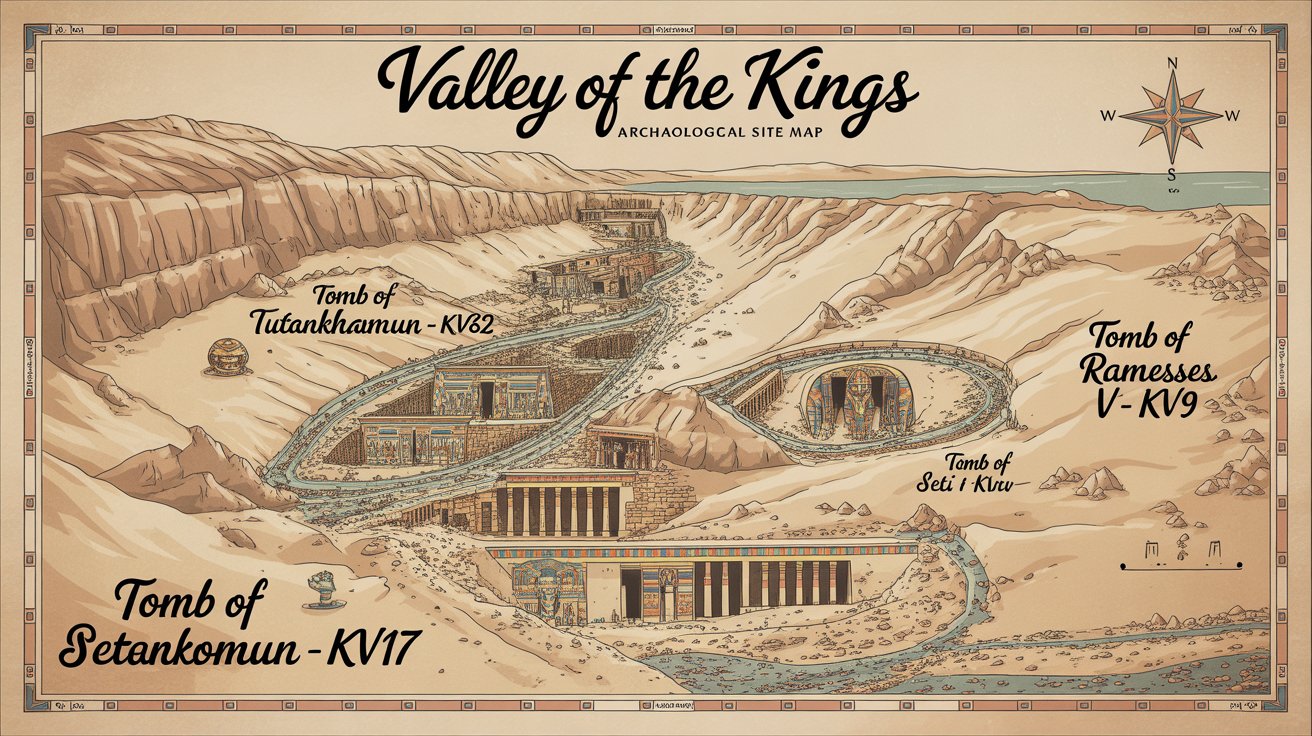
Understanding the Valley of the Kings map is essential for anyone planning to explore this vast archaeological site. The necropolis contains 63 discovered tombs and chambers, though not all are open to visitors at any given time. The tombs are numbered in order of their discovery, from KV1 (discovered first) to KV63 (discovered in 2005).
The most famous tomb on any Valley of the Kings map is KV62, the tomb of Tutankhamun, discovered virtually intact by Howard Carter in 1922. Other significant tombs include KV9 (Ramesses V and VI), renowned for its stunning astronomical ceiling; KV17 (Seti I), considered one of the most beautifully decorated tombs; and KV11 (Ramesses III), featuring detailed scenes of daily life.
When viewing a Valley of the Kings map, visitors will notice that tombs are strategically positioned throughout the valley floor and carved into the surrounding cliffs. The standard visitor ticket typically grants access to three tombs, with additional tickets required for special tombs like Tutankhamun's or Seti I's. The valley's visitor center provides detailed maps and information about which tombs are currently open for exploration.
The Magnificent Ancient Egyptian Tombs
The ancient Egyptian tombs within the Valley of the Kings represent the pinnacle of New Kingdom burial architecture and artistry. These tombs were constructed over a 500-year period, roughly from 1539 BCE to 1075 BCE, during Egypt's 18th, 19th, and 20th dynasties. Each tomb was designed as an elaborate eternal dwelling for the pharaoh's journey through the afterlife.
Architecture and Design
The ancient Egyptian tombs in the valley follow a general architectural pattern that evolved over time. Early tombs feature a simple straight corridor descending into the bedrock, while later tombs became increasingly complex with multiple chambers, side rooms, and intricate passageways designed to confuse potential thieves.
The construction process was remarkable. Teams of skilled workers, including stonecutters, plasterers, and artists, would spend years carving these elaborate structures entirely by hand. They worked by lamplight deep within the mountain, following precise architectural plans that aligned with religious texts and beliefs about the afterlife journey.
Stunning Decorations and Hieroglyphs
What truly distinguishes these ancient Egyptian tombs is their breathtaking interior decoration. Every surface—walls, ceilings, and pillars—was covered with vibrant paintings and intricate hieroglyphic texts. These weren't merely decorative; they served crucial religious functions, providing the deceased pharaoh with spells, prayers, and guidance for navigating the dangerous journey through the underworld.
The Book of the Dead, the Amduat (Book of What is in the Underworld), and the Book of Gates are among the sacred texts inscribed within these tombs. Vivid scenes depict the sun god Ra's nightly journey, protective deities, and the pharaoh's transformation into an immortal being among the gods.
Treasures and Burial Goods
The ancient Egyptian tombs were once filled with incredible treasures: golden furniture, jewelry, chariots, food offerings, clothing, and everything the pharaoh would need in the afterlife. Unfortunately, most tombs were plundered in antiquity, making the discovery of Tutankhamun's nearly intact tomb all the more extraordinary. His tomb alone contained over 5,000 objects, including his famous golden death mask, now displayed in the Egyptian Museum in Cairo.
Why the Valley Was Chosen
The pharaohs of the New Kingdom abandoned the tradition of building massive pyramids, which had proven vulnerable to robbery despite their imposing scale. Instead, they chose this isolated desert valley for several strategic and religious reasons.
The remote valley of kings location offered natural protection and isolation, far from populated areas. The cliffs provided the perfect canvas for tunneling deep into the rock, creating hidden chambers that could be sealed and concealed beneath desert debris. Additionally, the proximity to Thebes (modern Luxor), the religious capital of Egypt during the New Kingdom, made it an ideal location for royal burials while maintaining the connection to the living world and the mortuary temples on the valley's edge.
Famous Pharaohs Buried in the Valley
The Valley of the Kings serves as the final resting place for many of ancient Egypt's most powerful rulers:
Tutankhamun (KV62): Though a minor pharaoh, his tomb's discovery made him the most famous. The intact burial provided unprecedented insights into royal burial practices.
Ramesses II (KV7): One of Egypt's greatest pharaohs, known for his military campaigns and extensive building projects. His tomb, though damaged by flooding, reflects his monumental reign.
Hatshepsut (KV60): One of Egypt's few female pharaohs, her tomb was ingeniously hidden, and her mummy was only positively identified in 2007.
Seti I (KV17): This tomb is the longest and deepest in the valley, extending over 137 meters into the mountain, with some of the finest artwork ever discovered.
Thutmose III (KV34): Known as the "Napoleon of Egypt," this warrior pharaoh's tomb features unique oval-shaped chambers and beautiful astronomical decorations.
Planning Your Visit
Best Time to Visit
The ideal time to explore the valley of kings location is during Egypt's winter months, from October to April, when temperatures are more comfortable for exploring the desert site. Summer temperatures can exceed 40°C (104°F), making outdoor exploration challenging.
What to Expect
Visitors should arrive early in the morning to avoid crowds and the intense midday heat. The site opens at 6 AM during peak season. Comfortable walking shoes are essential, as the valley involves considerable walking on uneven terrain. Photography is prohibited inside the tombs to preserve the delicate ancient paintings, though photos are allowed in the valley itself.
The standard entrance ticket includes access to three tombs from a rotating selection. Special tickets are required for premium tombs like Tutankhamun's, Seti I's, and Ay's tomb. A small tourist train shuttles visitors from the entrance to the main valley area, though many prefer to walk and absorb the atmospheric setting.
Combining Your Valley Visit
Most visitors combine the Valley of the Kings with other nearby attractions on Luxor's West Bank, including the Temple of Hatshepsut, the Colossi of Memnon, the Valley of the Queens, and the Tombs of the Nobles. A full-day West Bank tour provides comprehensive insight into ancient Thebes and its necropolis.
Recent Discoveries and Ongoing Research
Archaeological work continues in the Valley of the Kings, with new discoveries still being made. In 2005, KV63 was discovered, and in 2008, two new entrances were found. Advanced technology like ground-penetrating radar and 3D scanning is revealing hidden chambers and providing new insights into known tombs.
Conservation efforts are ongoing to protect these ancient Egyptian tombs from the damaging effects of humidity, bacteria, and the millions of visitors who pass through each year. Some tombs are periodically closed for restoration work, ensuring these treasures survive for future generations.
The Valley's Lasting Legacy
The Valley of the Kings remains one of the world's most significant archaeological sites, offering an intimate connection to ancient Egyptian civilization. These ancient Egyptian tombs, carved deep into the Theban mountains, represent humanity's eternal quest to conquer death and achieve immortality. The valley of kings location, once a closely guarded secret, now welcomes explorers from around the world to witness the grandeur of Egypt's golden age.
Whether you're studying the intricate Valley of the Kings map, planning your visit to the valley of kings location, or marveling at photographs of these magnificent ancient Egyptian tombs, the valley continues to inspire wonder and reverence. It stands as a testament to the incredible achievements of ancient Egyptian civilization and their unwavering belief in the eternal journey of the soul.
Ready to experience the Valley of the Kings in the most immersive and stress-free way? Let Narita Travel turn your journey into an unforgettable adventure. From expert Egyptologist guides and comfortable transportation to perfectly planned West Bank itineraries, Narita Travel ensures you explore the legendary tombs with insight, ease, and authenticity. Book your Valley of the Kings tour today and walk in the footsteps of the pharaohs—while we take care of every detail. For anyone with a passion for ancient history, archaeology, or the mysteries of past civilizations, the Valley of the Kings offers an unforgettable journey into the heart of pharaonic Egypt, where the kings still sleep in their golden eternity.
