
Ouroboros Symbol Meaning: From Ancient Egypt to Modern Times
The ouroboros symbol, depicting a serpent or dragon eating its own tail, stands as one of humanity's most enduring and profound emblems. This ancient icon has captivated civilizations for millennia, appearing across cultures from Egypt to Greece, from Norse mythology to modern psychology. Understanding the ouroboros meaning reveals insights into how our ancestors conceptualized existence, cycles, and the nature of reality itself.
What Is the Ouroboros Symbol?
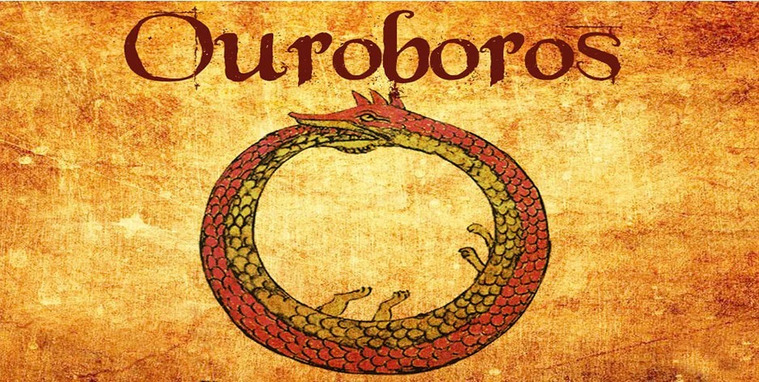
The ouroboros symbol features a snake or dragon formed in a circle, consuming its own tail in an eternal loop. The name derives from the ancient Greek words "oura" (tail) and "boros" (eating), literally translating to "tail-devourer." This circular serpent represents one of the oldest mystical symbols in human history, with its earliest known appearance dating back to ancient Egypt around 1600 BCE.
The visual simplicity of the ouroboros symbol belies its philosophical depth. At first glance, it appears as merely a snake in circular form, but this image encapsulates complex ideas about infinity, wholeness, and the cyclical nature of existence.
The Ancient Origins of Ouroboros Meaning
Ancient Egyptian texts provide our earliest documentation of the ouroboros symbol. It appeared in the Enigmatic Book of the Netherworld, adorning the tomb of Tutankhamun. Egyptian priests used this symbol to represent the journey of the sun god Ra through the underworld, emerging renewed each dawn. This established the core ouroboros meaning: eternal renewal through cycles of death and rebirth.
Greek philosophers later adopted and expanded the symbolism. The ouroboros appeared in Plato's Timaeus, where it represented the first living being, a self-sufficient creature requiring nothing external to itself. Gnostic traditions embraced the symbol as representing the duality of existence, the unity of opposites, and the divine nature of creation destroying and recreating itself.
In Norse mythology, the Midgard Serpent Jörmungandr encircles the world by grasping its own tail, embodying a similar concept of cosmic boundaries and cyclical time. This cross-cultural appearance demonstrates how the ouroboros meaning resonated with fundamental human attempts to understand existence.
Core Meanings of the Ouroboros Symbol
Eternal Cycles and Infinity
The primary ouroboros meaning centers on eternal return and infinite cycles. The serpent's circular form, with no beginning or end, represents perpetual renewal. Life emerges from death, endings contain new beginnings, and the universe operates through endless transformation. This interpretation appears consistently across cultures, suggesting a universal human recognition of cyclical patterns in nature and existence.
Self-Sufficiency and Wholeness
The ouroboros symbol also represents self-sufficiency and completeness. A creature that sustains itself by consuming itself needs nothing external, embodying absolute autonomy. This aspect of ouroboros meaning influenced alchemical traditions, where it symbolized the unity of matter and spirit, the alpha and omega combined into singular wholeness.
Creation and Destruction United
Perhaps the most profound ouroboros meaning involves the union of opposing forces. The snake simultaneously creates and destroys itself, representing how opposite forces generate dynamic balance rather than static opposition. This concept influenced everything from Eastern philosophy to modern dialectical thinking.
The Ouroboros Symbol in Alchemy and Mysticism
Medieval alchemists embraced the ouroboros symbol as a central emblem of their craft. They saw it representing the fundamental alchemical principle: all things return to their source. The ouroboros meaning in alchemy encompassed the cyclical nature of chemical processes, the unity of opposing elements, and the ultimate goal of transmutation.
The phrase "hen to pan" (one is all) often accompanied alchemical depictions of the ouroboros, emphasizing that all matter derives from a single source and returns to it. Alchemists believed that understanding this cycle was key to achieving the philosopher's stone and spiritual enlightenment.
In Gnostic and Hermetic traditions, the ouroboros symbol represented divine knowledge and the mysteries of creation. It embodied the concept that God is simultaneously creator and creation, alpha and omega, the beginning that is also the end.
Psychological Interpretation: Jung and the Ouroboros Meaning
Carl Jung, the pioneering psychologist, found profound significance in the ouroboros symbol. He interpreted it as representing the psyche's tendency toward wholeness and integration. The ouroboros meaning, in Jungian psychology, relates to the process of individuation, where the conscious and unconscious minds merge into unified selfhood.
Jung saw the self-consuming serpent as depicting the ego's relationship with the unconscious. The snake eating itself represents how consciousness continuously processes and reintegrates unconscious material, creating a dynamic cycle of psychological development. This interpretation gave the ancient ouroboros symbol renewed relevance in modern depth psychology.
The symbol also appears in Jungian analysis of the collective unconscious, representing archetypal patterns of death and rebirth that appear across human cultures and individual psychological journeys.
Modern Applications of the Ouroboros Symbol
Today, the ouroboros symbol appears in diverse contexts, from mathematics to literature, from corporate logos to tattoo art. Its enduring appeal stems from the universality of the ouroboros meaning.
In science, the symbol represents feedback loops and self-referential systems. The concept of autopoiesis in biology, where living systems produce and maintain themselves, echoes the ancient ouroboros meaning. Computer scientists use similar circular logic concepts when discussing recursive functions.
Popular culture has embraced the ouroboros symbol extensively. It appears in fantasy literature, video games, television series, and films, often representing time loops, immortality, or the cyclical nature of conflict. These modern uses maintain connection to the traditional ouroboros meaning while adapting it for contemporary storytelling.
The Ouroboros in Different Cultures
While the ouroboros symbol originated in Egypt and Greece, similar concepts appear worldwide. Chinese culture features the dragon eating its tail in some traditions, representing similar cyclical concepts. Hindu and Buddhist philosophies contain the concept of samsara, the wheel of rebirth, which parallels ouroboros meaning without identical imagery.
African, Aztec, and Native American traditions all feature serpent symbolism involving cycles, renewal, and the interconnection of life and death. This global resonance suggests the ouroboros symbol taps into fundamental human intuitions about existence and time.
Philosophical Implications of Ouroboros Meaning
The ouroboros symbol raises profound philosophical questions. Does time move linearly or cyclically? Is the universe finite or infinite? Can something truly create itself? These questions, embedded in the ouroboros meaning, remain relevant to contemporary philosophy and cosmology.
Nietzsche's concept of eternal recurrence resonates with ouroboros symbolism. His idea that the universe repeats itself infinitely mirrors the ancient symbol's core message. Modern physics, with concepts like cyclical cosmological models, sometimes returns to ideas that the ouroboros symbol represented millennia ago.
The Ouroboros Symbol in Personal Growth
Many people today adopt the ouroboros symbol as a personal emblem representing their own journey of transformation. The ouroboros meaning translates to individual experience through the recognition that personal growth involves continuous cycles of learning, unlearning, and relearning. Each ending facilitates a new beginning; each achievement reveals new challenges.
This personal interpretation of the ouroboros symbol helps individuals accept life's cyclical nature rather than viewing existence as linear progress toward a fixed goal. It encourages embracing change, accepting setbacks as part of growth, and recognizing that completion is never final but always leads to renewal.
Conclusion: The Timeless Power of the Ouroboros Symbol
The ouroboros symbol endures because it captures something essential about existence that humans across cultures and centuries have recognized. Whether interpreted as representing eternal cycles, unity of opposites, self-sufficiency, or psychological integration, the ouroboros meaning speaks to fundamental aspects of reality and consciousness.
From ancient Egyptian tombs to modern psychology textbooks, from alchemical manuscripts to contemporary logos, this circular serpent continues consuming its tail through time itself. The ouroboros symbol reminds us that endings and beginnings intertwine, that destruction and creation form a unified process, and that the universe operates through eternal renewal.
Understanding the ouroboros meaning enriches our perspective on time, change, and existence. It offers a symbolic language for discussing concepts that purely rational discourse struggles to capture. In a world often focused on linear progress and fixed endpoints, the ouroboros symbol invites us to recognize the deeper rhythms of cyclical transformation that govern both cosmos and consciousness.
Whether you encounter the ouroboros symbol in ancient texts, modern art, or personal reflection, its message remains constant: the end is the beginning, the beginning is the end, and the cycle continues eternally.
home
