
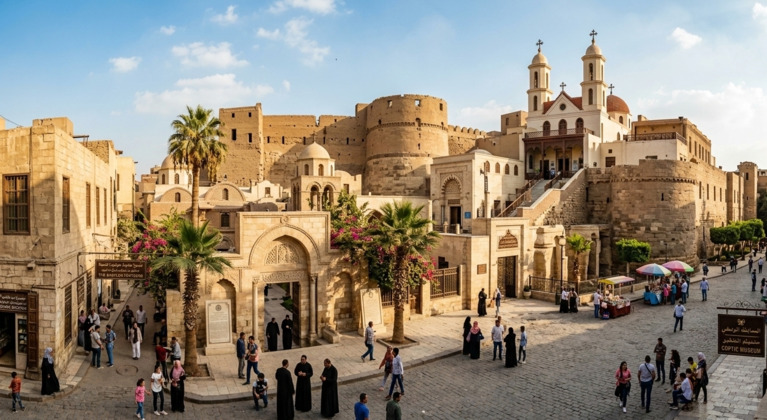
Coptic Cairo: A Journey Through Egypt’s Christian Heritage
Coptic Cairo is one of the most historic and spiritually significant districts in Egypt. Located in the heart of Cairo, this ancient neighborhood offers a fascinating glimpse into the early days of Christianity in Egypt. With centuries-old churches, monasteries, and religious landmarks, Coptic Cairo stands as a living testament to the country’s rich religious diversity and cultural heritage.
For travelers exploring Egypt beyond the pyramids and temples, visiting Coptic Cairo provides a unique opportunity to discover sacred sites, ancient architecture, and stories that date back nearly two thousand years.
What is Coptic Cairo?
Coptic Cairo refers to a historic area within Old Cairo that was once a stronghold of Christianity during the Roman and Byzantine periods. The word “Coptic” comes from the Greek word Aigyptios, meaning Egyptian, and today it refers to Egypt’s native Christian community.
The district developed around the Roman fortress known as Babylon Fortress. Over time, churches, monasteries, and religious institutions were built within and around its walls, making it one of the most important Christian centers in the Middle East.
Today, Coptic Cairo remains an active religious area where visitors can explore ancient churches, museums, and sacred sites that reflect centuries of faith and tradition.
The Hanging Church (Al-Muallaqa)
One of the most famous landmarks in Coptic Cairo is the Hanging Church, officially known as Saint Virgin Mary's Coptic Orthodox Church.
The church earned its nickname “Hanging Church” because it was built above the gatehouse of the Roman Babylon Fortress. Its elevated structure creates the impression that it is suspended above the ground.
Highlights include:
-
Beautiful wooden ceilings shaped like Noah’s Ark
-
Marble pulpits and intricate icons
-
A collection of ancient Coptic religious artwork
Dating back to the 3rd century, the Hanging Church is one of the oldest churches in Egypt and an important seat of the Coptic Orthodox Patriarchate in the past.
Saints Sergius and Bacchus Church
Another significant site in Coptic Cairo is the Saints Sergius and Bacchus Church, also known locally as Abu Serga Church.
This church is believed to be built above the cave where the Holy Family—including Jesus Christ, Virgin Mary, and Saint Joseph took refuge during their journey into Egypt.
Because of this connection, the church is one of the most sacred pilgrimage destinations for Christians visiting Egypt.
The Cave Church (Saint Simon the Tanner Monastery)
Monastery of Saint Simon the Tanner
Although not located inside the traditional boundaries of Coptic Cairo, the Cave Church, also known as the Monastery of Saint Simon the Tanner, is one of the most extraordinary Christian sites in Cairo and is closely connected to the history of the Coptic Orthodox Church.
This remarkable church is carved directly into the cliffs of the Mokattam Hills. It is the largest cave church in the Middle East and can accommodate more than 20,000 worshippers.
The monastery is dedicated to Saint Simon the Tanner, a revered figure in Coptic history. According to tradition, Saint Simon played a role in the famous miracle of moving the Mokattam Mountain during the time of Pope Abraham of Alexandria in the 10th century.
Visitors to the Cave Church will see:
-
Massive amphitheater-style seating carved into rock
-
Stunning carvings of biblical scenes in the stone walls
-
A large altar set within the mountain itself
-
Multiple chapels throughout the monastery complex
Despite being located in the district of Manshiyat Naser, the Cave Church has become an important pilgrimage destination for Coptic Christians and a fascinating cultural attraction for travelers exploring the Christian heritage of Egypt.
The Greek Orthodox Church of Saint George
Church of Saint George
This circular church stands out for its unique architectural design. Built in the 10th century and rebuilt in the early 20th century, the church belongs to the Greek Orthodox community in Cairo.
Inside the church you can see:
-
Beautiful religious murals
-
A shrine dedicated to Saint George
-
Historic religious relics
The church is also associated with the nearby monastery of Saint George.
The Convent of Saint George
Convent of Saint George
This peaceful convent is located near the Church of Saint George and serves as a residence for Greek Orthodox nuns.
Visitors often come here for its spiritual atmosphere and views over the ancient Roman fortress.
Church of Saint Barbara
Church of Saint Barbara
This beautiful church dates back to the 5th century and is dedicated to Saint Barbara, a Christian martyr.
The church is known for its:
-
Elegant wooden screens
-
Marble columns
-
Collection of relics and icons
It is one of the finest examples of traditional Coptic church architecture.
The Coptic Museum
To truly understand the art, culture, and history of Egypt’s Christian community, visitors should explore the Coptic Museum.
Founded in 1908, the museum houses the largest collection of Coptic artifacts in the world. Its exhibits showcase:
-
Ancient manuscripts
-
Early Christian textiles
-
Stone carvings and icons
-
Wooden church decorations
The museum highlights how Coptic culture blended Pharaonic, Roman, and Byzantine artistic traditions.
Why Coptic Cairo is Important
Coptic Cairo represents a unique intersection of religions and cultures. Within a small area, visitors can find churches, a synagogue, and nearby mosques, all coexisting within the ancient walls of Old Cairo.
The district offers insight into:
-
The early spread of Christianity in Egypt
-
The architectural evolution of religious buildings
-
The cultural diversity of Egyptian history
For historians, pilgrims, and travelers alike, Coptic Cairo provides an unforgettable cultural experience.
Tips for Visiting Coptic Cairo sites
If you plan to explore Coptic Cairo, consider these tips:
Visit early in the morning – The area is quieter and more comfortable for exploring.
Dress modestly – Since many sites are active places of worship, respectful clothing is recommended.
Combine with nearby attractions – You can easily visit other Old Cairo landmarks in the same day.
Coptic Cairo is a hidden treasure within Egypt’s bustling capital. While many visitors come to Egypt for its ancient pharaonic monuments, this historic district tells another essential chapter of the country’s story one rooted in faith, resilience, and cultural diversity.
From the Hanging Church to the Coptic Museum, every corner of Coptic Cairo reveals layers of history that connect the ancient past with the present.
For travelers interested in religion, architecture, or history, exploring Coptic Cairo is an unforgettable journey through Egypt’s Christian heritage.
FAQ About Coptic Cairo
Where is Coptic Cairo located?
Coptic Cairo is located in Old Cairo within the city of Cairo, near the historic Roman fortress of Babylon Fortress.
Why is it called Coptic Cairo?
The area is named after the Coptic Christians of Egypt who built many churches and religious institutions there during the early centuries of Christianity.
What are the main attractions in Coptic Cairo?
Major attractions include the Hanging Church, Saints Sergius and Bacchus Church and the Coptic Museum.
How old is Coptic Cairo?
Many structures in Coptic Cairo date back to the 3rd–7th centuries, although the area itself developed around the Roman Babylon Fortress.
Is Coptic Cairo worth visiting?
Yes. Coptic Cairo is one of the most important religious and historical areas in Egypt, offering a unique experience that combines history, spirituality, and culture.
