
The Pyramid of Unas: Ancient Egypt's Gateway to the Afterlife
The Pyramid of Unas stands as one of ancient Egypt's most significant monuments, not for its size, but for the revolutionary texts inscribed within its chambers. Located in Saqqara, this modest pyramid belonging to King Unas changed Egyptian burial practices forever and offers modern visitors an intimate glimpse into the beliefs that shaped one of history's greatest civilizations.
Who Was Pharaoh Unas?
Pharaoh Unas (also spelled Wenis or Ounas) ruled Egypt during the final decades of the Fifth Dynasty, approximately 2375-2345 BCE. As the last king of his dynasty, Unas inherited a weakening central authority and declining resources. Yet despite these challenges, this pharaoh achieved something no ruler before him had accomplished: he inscribed the walls of his burial chamber with sacred texts designed to ensure his successful journey to the afterlife.
King Unas's reign marked a transitional period in Egyptian history. While earlier pharaohs had built grander monuments, Unas focused on spiritual innovation rather than architectural monumentality. His pyramid may be smaller than those of his predecessors, but its impact on Egyptian religious thought proved immeasurable.
The Architecture of King Unas Pyramid
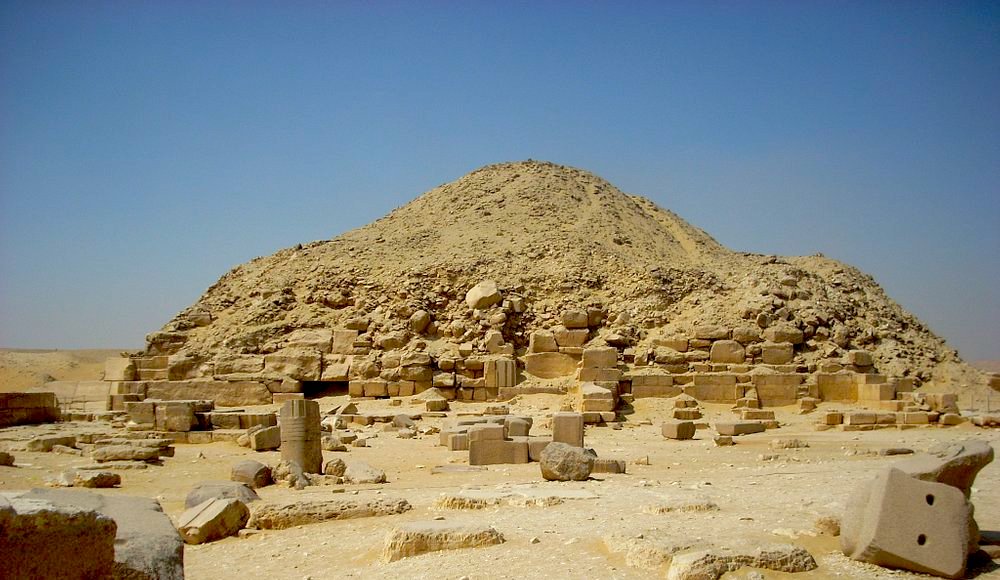
The Pyramid of Unas originally stood approximately 43 meters (141 feet) high with a base of 57.75 meters (189 feet) on each side. Today, much of the outer casing has been stripped away, leaving it resembling a heap of rubble to the untrained eye. However, beneath this weathered exterior lies one of Egypt's most precious treasures.
The pyramid complex includes a causeway stretching nearly 750 meters from the valley temple to the pyramid itself. This causeway once featured beautifully carved reliefs depicting everything from craftsmen at work to ships transporting granite columns. Some of these reliefs, particularly those showing emaciated figures during a famine, provide rare glimpses into the hardships faced during Unas's reign.
The entrance to the pyramid lies on the north face, following traditional design. A descending corridor leads to a horizontal passage, which opens into an antechamber. To the west lies the burial chamber, while to the east sits the serdab, a chamber for statues of the deceased king.
The Revolutionary Pyramid Texts
What makes the Pyramid of Unas truly exceptional are the Pyramid Texts—the oldest substantial body of religious writings in human history. These hieroglyphic inscriptions cover the walls of the burial chamber, antechamber, and portions of the corridor, totaling 283 individual "utterances" or spells.
Written in Old Egyptian, these texts served as a guidebook for Pharaoh Unas in the afterlife. They include spells to protect the king from dangerous creatures, utterances to help him ascend to the sky and join the circumpolar stars, and prayers invoking various deities to aid his transformation. The texts describe the king's journey becoming one with Osiris, the god of the afterlife, and joining Re, the sun god, in his daily celestial voyage.
The inscriptions are carved in columns of elegant hieroglyphs painted in blue-green pigment, creating a starry sky effect that reinforced the king's cosmic destiny. Phrases like "The sky is overcast, the stars are obscured" and "O Unas, you have not gone dead, you have gone alive" reveal the profound spiritual concerns of ancient Egyptians.
Before King Unas, pyramid interiors remained undecorated. His decision to inscribe these sacred texts established a tradition that would continue through the Sixth Dynasty and eventually evolve into the Coffin Texts of the Middle Kingdom and the famous Book of the Dead in the New Kingdom.
Visiting the Pyramid of Unas Today
Located in the Saqqara necropolis, about 30 kilometers south of Cairo, the Pyramid of Unas is accessible to visitors as part of the larger Saqqara archaeological site. The pyramid sits southwest of Djoser's famous Step Pyramid, making it easy to visit both monuments in a single trip.
Descending into the pyramid's interior offers an unforgettable experience. The narrow passages open into chambers where the original hieroglyphs remain visible after more than 4,300 years. The preservation of these texts, protected from the elements by the pyramid's stone, allows visitors to stand in the presence of humanity's earliest religious literature.
Photography inside the pyramid is typically restricted to preserve the ancient pigments, but the experience of seeing these texts in their original context is profound even without capturing images. The intimate scale of the chambers creates a personal connection to Pharaoh Unas that larger, more famous pyramids cannot match.
The site is generally less crowded than the Giza pyramids, allowing for a more contemplative visit. Early morning visits offer the best lighting and fewer tourists. The nearby Imhotep Museum at Saqqara provides excellent context for understanding the pyramid and its texts.
The Legacy of King Unas Pyramid
Though King Unas built a relatively modest pyramid, his innovation in inscribing sacred texts transformed Egyptian funerary practices. These texts democratized access to afterlife knowledge, as later Egyptians adapted and expanded them for non-royal use. The Pyramid Texts became foundational to Egyptian religion, influencing spiritual thought for millennia.
Archaeological work continues at the site, with recent discoveries including the tombs of priests who served the cult of Unas long after his death. These finds demonstrate the enduring importance of his cult and the continued reverence for this innovative pharaoh.
The Pyramid of Unas reminds us that greatness isn't always measured in size. While it lacks the monumental scale of earlier pyramids, it contains something far more precious: the written expression of ancient Egypt's deepest beliefs about death, transformation, and eternal life. For anyone seeking to understand the spiritual heart of ancient Egyptian civilization, the pyramid of this groundbreaking pharaoh offers an unparalleled window into the ancient mind.
Planning Your Visit to the Pyramid of Unas
When planning your visit to the Pyramid of Unas, consider combining it with other Saqqara attractions including the Step Pyramid, the Serapeum, and the recently opened tomb of Mehu. The site is open daily, though hours may vary seasonally. Hiring a knowledgeable guide can greatly enhance your understanding of the Pyramid Texts and their significance.
The legacy of Pharaoh Unas endures not in towering stone but in the beautiful words that line his eternal resting place—humanity's first written prayers for immortality, preserved for us to discover thousands of years later.
