
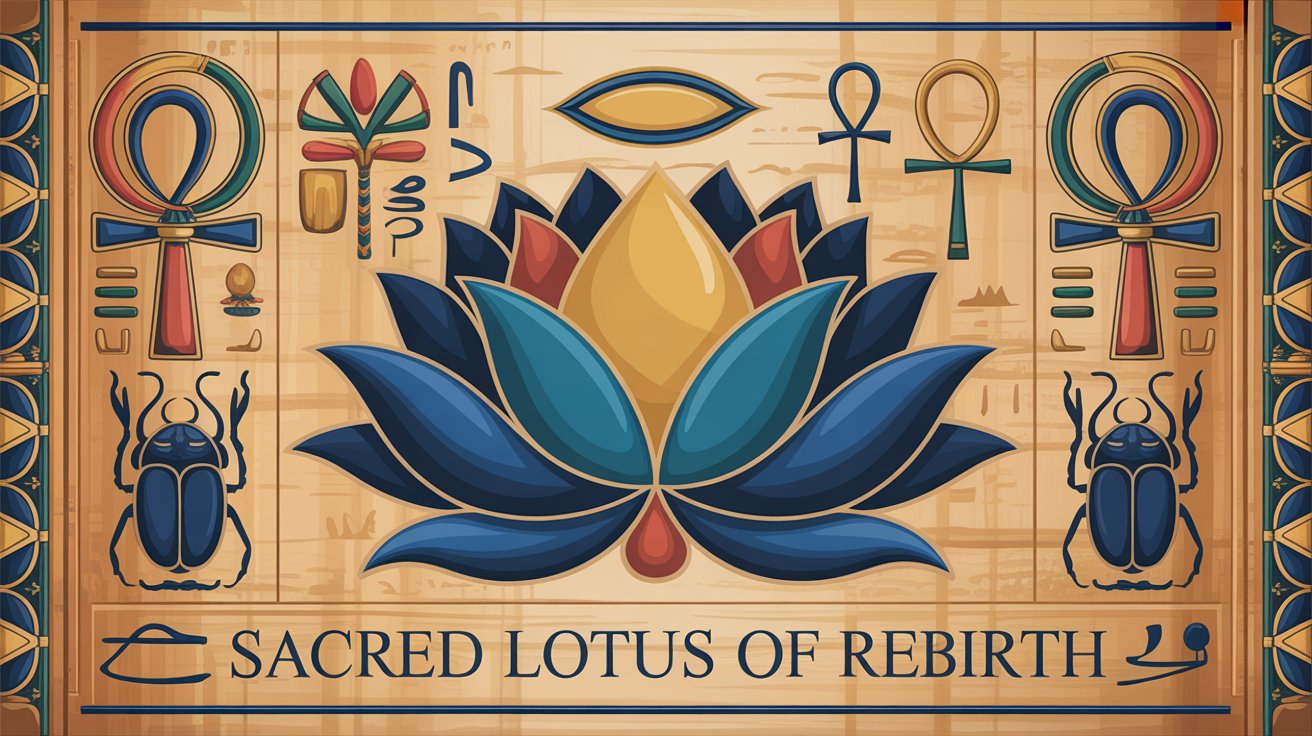
The Lotus Symbol: Ancient Egyptian Meanings and Sacred Significance
The lotus symbol held profound importance in ancient Egyptian civilization, where it represented far more than a beautiful flower. For thousands of years, the Egyptians revered the lotus blossom as a sacred emblem of creation, rebirth, and the eternal cycle of life. Understanding the meaning of the lotus blossom in Egyptian culture reveals the sophisticated spiritual worldview of one of history's greatest civilizations.
The Lotus in Ancient Egypt: Two Sacred Flowers
Ancient Egyptians encountered two types of lotus flowers along the Nile: the blue lotus (Nymphaea caerulea) and the white lotus (Nymphaea lotus). Both varieties played crucial roles in Egyptian religion, art, and daily life, though the blue lotus held particular spiritual significance.
The lotus symbol became deeply intertwined with Egyptian cosmology because of the flower's remarkable behavior. Each evening, the lotus closes its petals and sinks beneath the water's surface. At dawn, it rises and opens again to greet the sun. This daily cycle made the lotus blossom a perfect metaphor for death and resurrection, themes central to Egyptian religious beliefs.
The Lotus Symbol and Egyptian Creation Myths
The meaning of the lotus blossom in Egyptian creation mythology cannot be overstated. According to ancient texts, the lotus was present at the moment of creation itself. One creation myth describes how, in the beginning, there was only the dark, primordial waters of Nun. From these waters emerged a giant lotus flower, and when its petals opened, the sun god Ra appeared, bringing light to the world.
This creation story established the lotus symbol as representative of divine birth and the beginning of all existence. Temple walls throughout Egypt depicted this sacred lotus of creation, reminding worshippers of the cosmic origins of their world. The lotus wasn't merely a symbol—it was considered a participant in creation itself.
Another version of the creation myth describes the young sun god Nefertum emerging from a blue lotus blossom at the dawn of time. Nefertum, whose name means "beautiful one who closes" or "one who does not close," was specifically associated with the lotus and its perfume. He represented the first light of dawn and the renewal that comes with each new day.
The Blue Lotus: Sacred Flower of the Sun God
The blue lotus held exceptional status in Egyptian spirituality. Known as "Seshen" in ancient Egyptian, this flower was intimately connected with Ra, the sun god. The lotus symbol appeared throughout solar mythology, representing the sun's nightly journey through the underworld and triumphant rebirth each morning.
Egyptians observed that the blue lotus opened with the sunrise and closed at sunset, mirroring the sun's daily journey across the sky. This synchronization with the solar cycle reinforced the meaning of the lotus blossom as a symbol of the sun, light, and divine power. Temple priests used blue lotus flowers in religious ceremonies, believing the flower facilitated spiritual connection with the gods.
The blue lotus also possessed psychoactive properties. Ancient Egyptians steeped the flowers in wine to create a mildly euphoric beverage used in religious rituals and celebrations. This intoxicating quality added another dimension to the lotus symbol, associating it with altered states of consciousness, divine communion, and transcendence of earthly limitations.
The Lotus Symbol in Egyptian Art and Architecture
Egyptian artists incorporated the lotus symbol into virtually every aspect of their visual culture. The meaning of the lotus blossom pervaded temple architecture, tomb paintings, jewelry, furniture, and everyday objects. Massive stone columns were carved to resemble bundled lotus stems, with capitals shaped like lotus buds or open flowers. These "lotus columns" supported temple roofs throughout Egypt, symbolically holding up the sky just as the primordial lotus held the newborn sun.
Paintings and reliefs frequently depicted nobles and royalty holding lotus flowers to their noses, inhaling their fragrance. This gesture symbolized rebirth and spiritual renewal. At banquets illustrated in tomb paintings, guests wear lotus flowers in their hair or hold them, suggesting the flower's role in celebrations and its association with joy, pleasure, and the good life Egyptians hoped to enjoy in the afterlife.
The lotus symbol also appeared prominently in hieroglyphic writing. The hieroglyph for "lotus" represented Upper Egypt and was incorporated into royal cartouches and religious texts. The number "1000" was written using the lotus symbol, perhaps suggesting infinite abundance or cosmic perfection.
The White Lotus and Royal Symbolism
While the blue lotus dominated religious symbolism, the white lotus carried its own significance. The white lotus symbol represented purity, elegance, and, importantly, Upper Egypt. In the unified kingdom, the white lotus of the south complemented the papyrus plant of Lower Egypt, together symbolizing the union of the two lands.
The meaning of the lotus blossom in royal contexts included legitimacy and divine kingship. Pharaohs were depicted emerging from lotus flowers, emphasizing their divine nature and connection to the gods. This imagery reinforced the concept that Egyptian rulers were not merely human leaders but divine beings who had emerged from the same creative force that brought forth the sun and all life.
The Lotus Symbol in Death and Rebirth
Perhaps nowhere was the lotus symbol more important than in Egyptian funerary practices and beliefs about the afterlife. The meaning of the lotus blossom as a promise of resurrection made it central to tomb decorations and burial goods. Egyptians placed lotus flowers on mummies and in tombs, symbolizing the deceased's hoped-for rebirth in the afterlife.
The Book of the Dead, a collection of spells to guide the deceased through the underworld, contains numerous references to the lotus. One spell promises to "transform into a lotus," allowing the dead to be reborn just as the sun emerges from the lotus each morning. This transformation spell reveals how deeply Egyptians believed in the lotus symbol's power to facilitate resurrection and eternal life.
Tomb paintings show the deceased smelling lotus flowers in the Field of Reeds, the Egyptian paradise. This imagery suggested that the pleasures of life—including the beautiful fragrance of the lotus—would continue in the afterlife. The lotus thus bridged the worlds of the living and the dead, offering comfort and hope to those facing mortality.
The Lotus in Egyptian Daily Life
Beyond religious contexts, the lotus symbol permeated everyday Egyptian life. The flowers decorated homes, were given as gifts, and featured in perfumes and cosmetics. Egyptian women wore lotus-scented oils, and the flower appeared on mirrors, jewelry, and household items. This widespread use demonstrates that the meaning of the lotus blossom encompassed not only cosmic and spiritual dimensions but also earthly beauty, pleasure, and refinement.
Lotus wine, made by steeping blue lotus flowers in wine or beer, was consumed at festivals and celebrations. While possessing mild psychoactive effects, it was primarily enjoyed as a pleasant intoxicant that enhanced social gatherings. The association of the lotus with celebration and joy complemented its more solemn religious significance.
The Lotus Offering: Sacred Ritual
Offering lotus flowers to the gods was a fundamental religious practice. Temple rituals began each day with priests presenting fresh lotus blossoms to divine statues, symbolizing the offering of life, beauty, and purity to the gods. The lotus symbol in these contexts represented humanity's finest gifts to the divine realm.
The meaning of the lotus blossom in ritual contexts also included purification and sanctification. Before entering sacred spaces or conducting ceremonies, priests often held lotus flowers or wore lotus garlands, symbolically purifying themselves through association with this sacred plant. The lotus mediated between human and divine, making spiritual connection possible.
Legacy of the Egyptian Lotus Symbol
The ancient Egyptian understanding of the lotus symbol influenced later cultures throughout the Mediterranean and Near East. Greek and Roman visitors to Egypt encountered lotus symbolism and incorporated elements of it into their own cultures. The lotus symbol's association with creation, the sun, and resurrection resonated across cultural boundaries.
Today, when we examine Egyptian artifacts in museums worldwide, the lotus appears again and again, testifying to its central importance in Egyptian civilization. From the grandest temple to the humblest household object, the meaning of the lotus blossom pervaded Egyptian life, offering a window into their sophisticated spiritual worldview.
Conclusion: The Eternal Lotus
The lotus symbol in ancient Egypt represented the very essence of existence: the daily miracle of sunrise, the mystery of creation, the hope of resurrection, and the beauty of life itself. The meaning of the lotus blossom encompassed cosmic creation myths, solar theology, royal ideology, funerary beliefs, and everyday aesthetics.
Understanding the Egyptian lotus symbol enriches our appreciation of this ancient civilization's complexity and depth. The lotus was not merely decorative but deeply meaningful, connecting Egyptians to their gods, their history, and their hopes for eternity. From the primordial waters of creation to the promised fields of paradise, the lotus accompanied Egyptians through every stage of existence, remaining forever a symbol of life's eternal renewal and the promise of rebirth into light.
home
