
Dendera Temple: Hathor’s Sacred Sanctuary
The Dendera Temple complex stands as one of ancient Egypt's most remarkably preserved sacred sites, captivating visitors with its stunning architectural beauty and mysterious astronomical ceiling. Located approximately 60 kilometers north of Luxor, the Temple of Hathor Egypt offers an unforgettable journey into the spiritual world of the ancient Egyptians.
What is Dendera Temple?
Dendera Temple, officially known as the Dendera Temple Complex, is an extensive religious site dedicated primarily to Hathor, the ancient Egyptian goddess of love, beauty, music, and motherhood. While temples have existed at this location since the Old Kingdom, the current structure dates primarily to the Ptolemaic and Roman periods, making it one of the best-preserved temple complexes in all of Egypt.
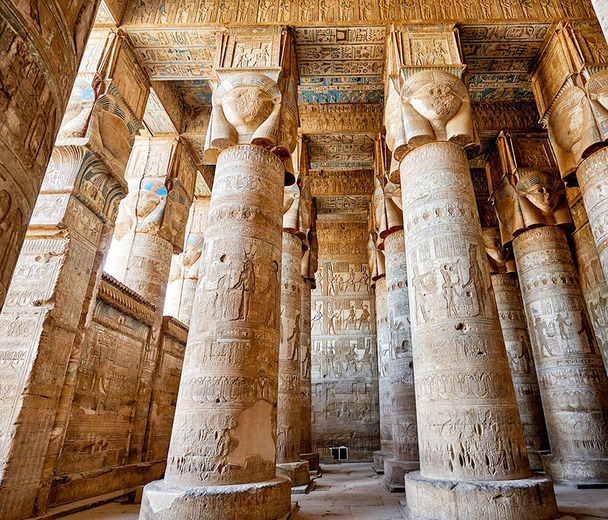
The main attraction, the Hathor Temple, showcases the architectural magnificence of late ancient Egyptian construction, with its towering columns, detailed hieroglyphics, and vibrant ceiling paintings that retain their colors after more than two millennia.
History of the Dendera Temple Complex
The sacred site of Dendera has been a place of worship for over 4,000 years. Archaeological evidence suggests that temples dedicated to Hathor existed here as early as the Old Kingdom. However, the magnificent structure visitors see today was constructed during the Ptolemaic Dynasty, with construction beginning around 54 BCE and continuing through the Roman period.
Queen Cleopatra VII and her son Caesarion are depicted on the temple's exterior walls, forever immortalized in stone. The temple remained an active religious center well into the Roman era, with the last hieroglyphic inscriptions dating to 394 CE, making Dendera one of the final outposts of ancient Egyptian religious practice.
Architecture and Design of the Temple of Hathor Egypt
The Dendera Temple complex covers approximately 40,000 square meters and includes several structures, though the Temple of Hathor dominates the site. The architectural layout follows traditional Egyptian temple design while incorporating Greco-Roman influences.
The Hypostyle Hall
Upon entering the Hathor Temple, visitors are greeted by the magnificent hypostyle hall featuring 24 massive columns, each crowned with a capital depicting the face of Hathor with her characteristic cow ears. The ceiling above displays one of the most famous astronomical representations in ancient Egypt, showing the sky goddess Nut, zodiac signs, and celestial bodies in brilliant colors.
The Astronomical Ceiling
The Dendera Temple is world-renowned for its astronomical ceiling, which depicts the ancient Egyptian understanding of the cosmos. The famous Dendera Zodiac, now housed in the Louvre Museum (a plaster replica remains in the temple), originally adorned one of the ceiling panels and represents one of the most complete ancient star maps ever discovered.
The Crypts and Underground Chambers
Beneath the temple lie mysterious crypts decorated with reliefs showing the rituals and sacred objects used in Hathor's worship. These underground chambers once stored valuable ritual implements and may have played a role in the temple's mystery rites.
The Rooftop Chapels
The temple's rooftop features several small chapels, including the famous Chapel of the Union with the Disk, where rituals celebrating Hathor's union with the sun god Ra were performed. The rooftop also offers spectacular views of the surrounding landscape and the temple complex itself.
The Goddess Hathor and Her Worship
Hathor was one of ancient Egypt's most important and beloved deities. Often depicted as a woman with cow ears or as a complete cow, she embodied femininity, joy, motherhood, and celestial power. At Dendera, she was worshipped as the "Lady of Dendera" and "Mistress of Love."
The temple served as the center for elaborate festivals, most notably the annual "Festival of Drunkenness," which commemorated Hathor's role in saving humanity from destruction. Pilgrims traveled from across Egypt to participate in these celebrations and seek the goddess's blessings.
Other Structures in the Dendera Temple Complex
Beyond the main Hathor Temple, the complex includes several other significant structures:
- The Birth House (Mammisi): Where the divine birth of Hathor's son Ihy was celebrated
- The Sacred Lake: Used for ritual purification by temple priests
- The Sanatorium: Where pilgrims sought healing through dreams and divine intervention
- The Roman Birth House: Built by Emperor Augustus
- The Coptic Basilica: Evidence of the site's later Christian use
Unique Features That Make Dendera Special
Exceptional Preservation
Unlike many Egyptian temples, the Dendera Temple Complex retains much of its original roof structure, allowing visitors to experience the enclosed sacred spaces as ancient worshippers once did. The preservation of painted reliefs and hieroglyphics is extraordinary, with colors that appear almost fresh despite their age.
The Light Bulb Relief
One of Dendera's most controversial features is the so-called "Dendera Light" relief found in the crypts. Some alternative historians have claimed this depicts an ancient electric light bulb, though Egyptologists explain it as a representation of a djed pillar with a lotus flower spawning a snake, symbolizing creation and renewal.
Musical Heritage
The Hathor Temple was intimately connected with music and dance. Hathor was considered the patron of musicians, and sacred music formed an essential part of her worship. The temple walls depict sistrums (musical rattles sacred to Hathor) and scenes of ritual performances.
Visiting Dendera Temple: Practical Information
Location and Access
The Dendera Temple Complex is located near the modern town of Qena, approximately 60 kilometers north of Luxor. Most visitors arrive as part of organized tours from Luxor, though independent travel is possible. The journey typically takes about 1.5 hours by road.
Best Time to Visit
The cooler months from October through April offer the most comfortable visiting conditions. Arriving early in the morning allows you to explore before tour groups arrive and before the midday heat becomes intense. The temple complex typically sees fewer crowds than Luxor's major monuments, offering a more intimate experience.
What to Bring
Essential items include water, sun protection, comfortable walking shoes, and a flashlight or phone light for exploring the darker crypts and chambers. Photography is permitted in most areas, making a camera essential for capturing the temple's stunning details.
Why Dendera Temple Should Be on Your Egypt Itinerary
While the Pyramids of Giza and the temples of Luxor rightfully claim fame, the Dendera Temple Complex offers something uniquely special. The combination of exceptional preservation, stunning artistic details, intimate atmosphere, and mysterious astronomical knowledge creates an experience that transports visitors directly into ancient Egypt's spiritual world.
The temple's relative distance from Cairo means it receives fewer visitors than more accessible sites, allowing for a more contemplative and personal exploration. Walking through the same halls where Cleopatra once worshipped, gazing up at astronomical ceilings that still puzzle researchers today, and experiencing the peaceful sanctity of this ancient sacred space creates memories that last a lifetime.
Conclusion
The Dendera Temple Complex represents ancient Egyptian temple architecture and spiritual practice at its finest. The Temple of Hathor Egypt stands as a testament to the architectural genius, astronomical knowledge, and profound spirituality of ancient Egyptian civilization. Whether you're fascinated by archaeology, astronomy, ancient religions, or simply beautiful historical sites, Dendera offers an unparalleled window into the world of the pharaohs.
For anyone planning an Egyptian adventure, including the Dendera Temple in your itinerary promises an experience that rivals the country's more famous monuments while offering the bonus of smaller crowds and exceptional preservation that brings ancient Egypt vividly to life.
home
